The India-EU FTA is a genuine structural opportunity for Indian exporters. But the deciding variable in who captures it is not compliance breadth alone it is an understanding of how European buyers actually form trust with new suppliers. The two are not the same thing, and confusing them is the most consequential strategic error Indian companies can make right now.
A Historic Deal Whose Benefits Are Not Automatic
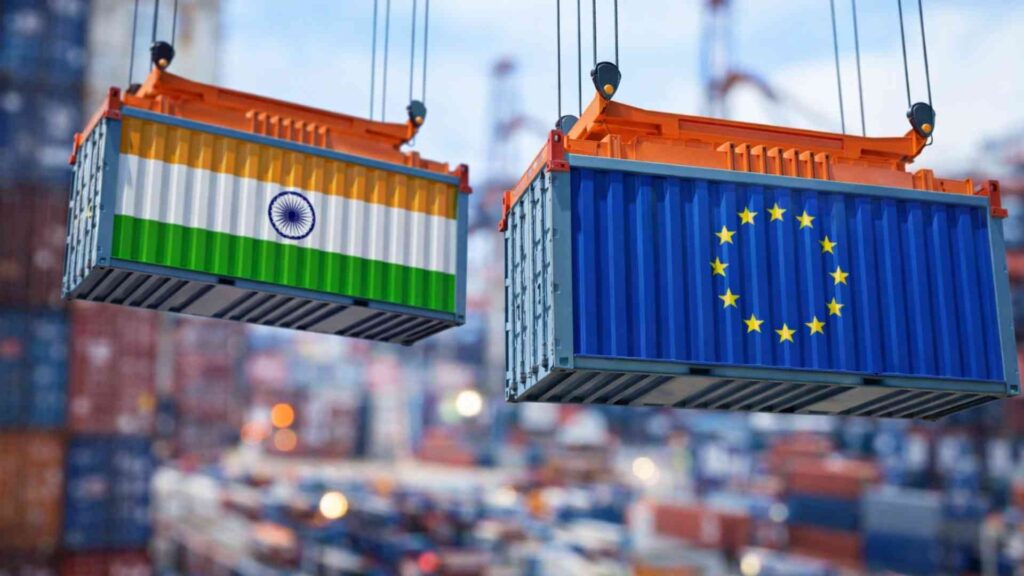
The conclusion of the India-EU Free Trade Agreement in January 2026 delivers a genuine structural shift. With preferential access across 97% of EU tariff lines covering 99.5% of trade value, Indian exporters in textiles, leather, chemicals, electronics, gems and jewellery, and agricultural produce now enter the European market on terms that were simply unavailable before. For sectors previously facing duties of up to 17% on leather, 12% on textiles, and 26% on marine products, this is not incremental it is a repricing of the entire competitive equation.
Understanding the opportunity requires understanding the buyer. European procurement decisions particularly in high-value, long-horizon categories like industrials, retail, food, and healthcare are not primarily optimisation exercises. Research on loss aversion in B2B sourcing consistently shows that buyers facing supply uncertainty weight the pain of a bad sourcing decision more heavily than the gain from a good one. The post-COVID and post-Red Sea disruption environment has amplified this tendency sharply.
This is where most Indian exporters are misreading the room. They are only preparing for a compliance evaluation. European buyers are also conducting a trust assessment.
The Three-Stage Trust Sequence European Buyers Actually Use
The most durable framework for understanding how buyers form trust with new suppliers remains Mayer, Davis and Schoorman’s (1995) integrative model of organisational trust. It identifies three sequential dimensions: 1) ability (can this supplier deliver to standard?), 2) integrity (will they tell me when something goes wrong?), and 3) benevolence (do they have my interests in mind, not just the transaction?). European buyers, appear to be working through this sequence — and most Indian exporters invest almost exclusively in the first dimension.
This is precisely why third-party ratings like EcoVadis and social audit standards like SEDEX/SMETA carry commercial weight well beyond their technical content. They are institutionalised integrity signals created because European buyers cannot directly observe supplier behaviour across complex, geographically distant supply chains. Indian exporters who treat these certifications as bureaucratic overhead are misunderstanding their psychological function in the buyer’s decision calculus.
Now, time is crucial. Once a European buyer identifies and embeds a trusted alternative supplier, the psychological cost of switching rises sharply. Buyers rationalise existing relationships and discount new alternatives a well-documented feature of status quo bias in procurement decision-making. An Indian manufacturer who builds a trusted relationship with a European buyer this year is not merely completing a transaction they are occupying a supplier position that a competitor will find difficult to displace later. Every quarter of delay is a quarter in which that position is claimed by someone else.
The differentiator is the deliberate construction of trust infrastructure: proactive communication during production delays rather than reactive crisis management; transparency in supply chain mapping before European buyers ask for it; long-term relationship investment through joint audits, co-development, and sustained account management. These behaviours signal integrity and benevolence in the Mayer-Davis-Schoorman framework, and they are what move a European buyer from vigilant evaluation to relational trust.
The FTA has restructured the economics of India-EU trade. The companies that will define India’s position in European supply chains over the next decade are those that understand the psychology underneath the economics and act on it promptly.